
Find the Key and BPM of Any Song
Choose an audio file to find its key, BPM, major or minor mode, and Camelot code for free. Analysis runs locally in your browser with no login or server upload.
Key and BPM Results without Server Uploads
Get the essential tempo and tonal data you need for DJ preparation, remix planning, sampling, and production.
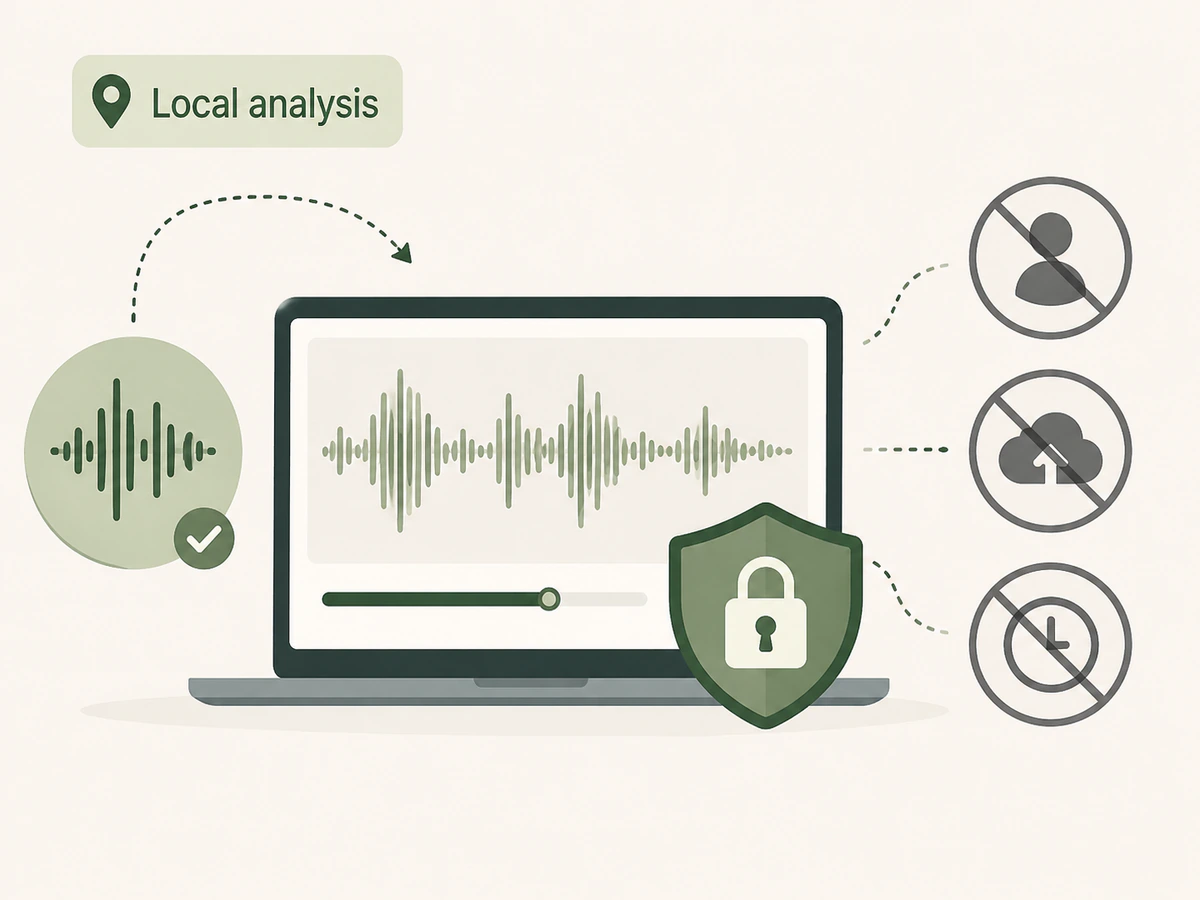
Free, Private Browser Analysis
Analyze supported audio locally in your browser without signing in, using credits, sending files to our servers, or saving analysis history.
Find Key & BPM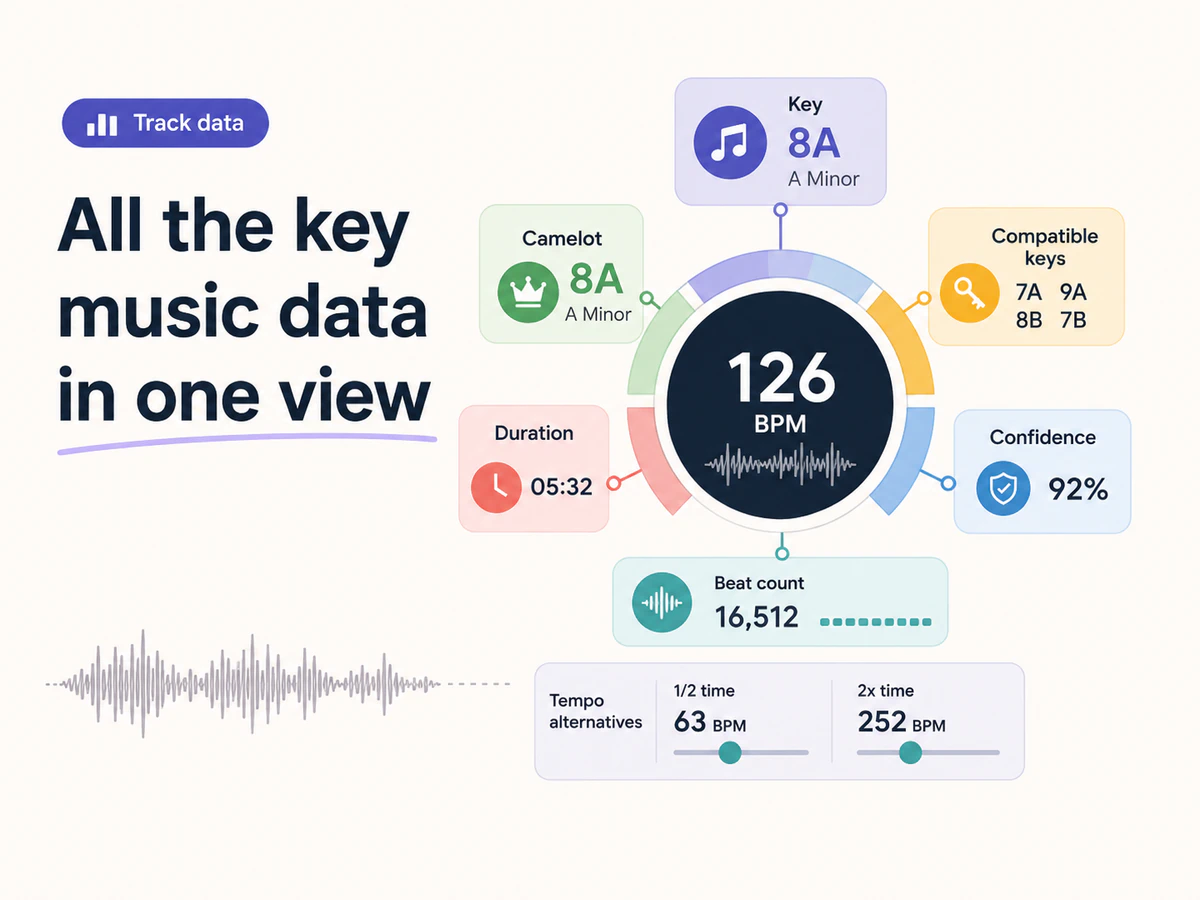
Get Key, BPM, and Camelot in One View
See BPM, musical key, major or minor mode, Camelot code, compatible keys, confidence, duration, beat count, and half-time or double-time alternatives together.
Find Key & BPM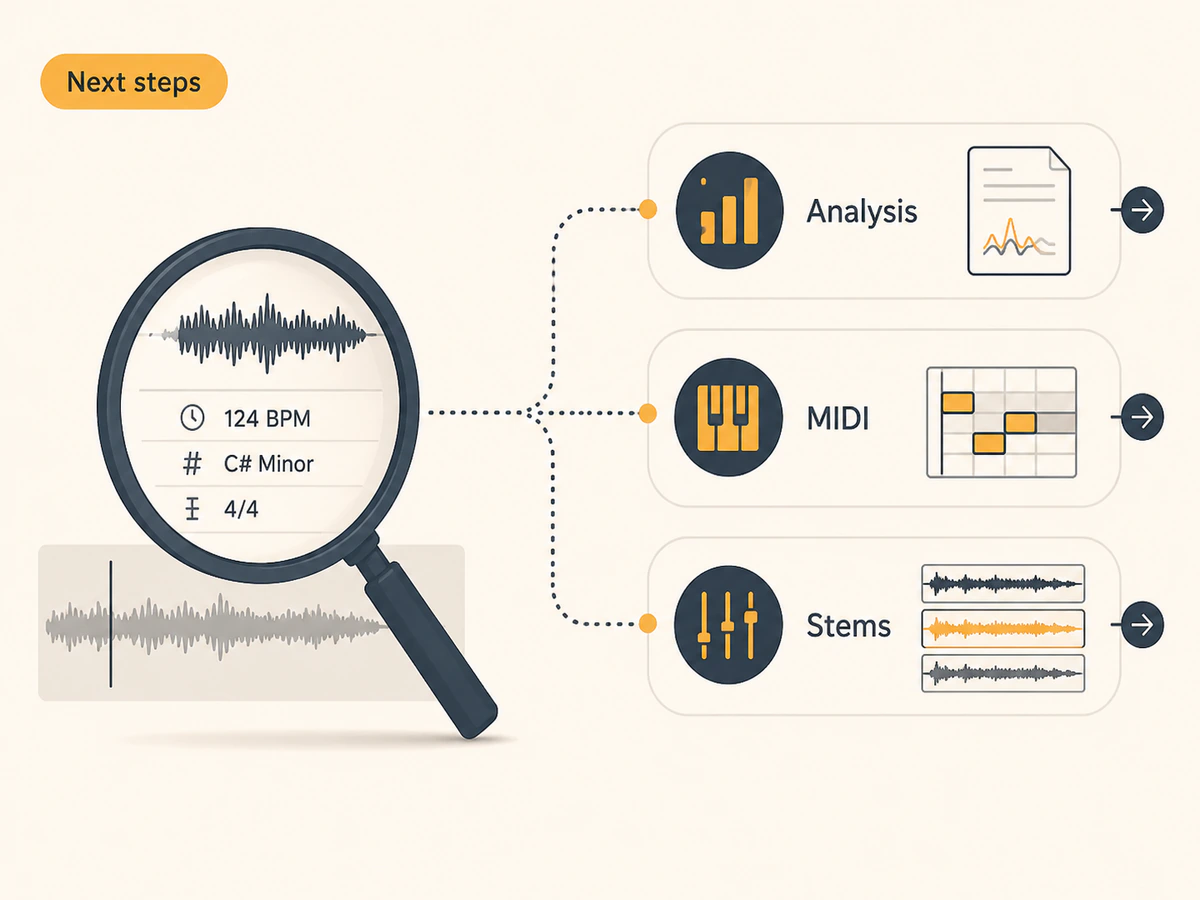
Continue Your Music Workflow
Use the detected values as a reference when you open full song analysis, convert audio to MIDI, or split stems in a separate workflow.
Find Key & BPMHow to Read Your Key and BPM Results
Understand what each result means before you use it for beatmatching, harmonic mixing, sampling, or production decisions.
Understand BPM and Tempo
- BPM measures how many beats occur in one minute. DJs use it to align tracks, while producers use it to set project tempo, warp samples, and place loops on the grid. Treat the detected value as a starting point, and check the half-time or double-time option when the pulse feels slower or faster.
Read Musical Key and Mode
- The key identifies the track's likely tonal center, while the mode shows whether that center is major or minor. Use both when matching vocals, samples, chords, or instruments. Songs that change key or have ambiguous harmony may produce a lower-confidence estimate.
Use Camelot and Compatible Keys
- Camelot code maps standard keys to a DJ-friendly number and letter. A means minor and B means major. Tracks with the same code, neighboring numbers, or the corresponding A/B pair are common starting points for harmonic mixing, but always listen for clashes before committing to a transition.
Check Confidence and Tempo Alternatives
- Confidence reflects how clearly the analyzed audio supports a detected value; it is not an accuracy guarantee. Sparse percussion, tempo changes, dense mixes, tuning drift, or key changes can affect results. Compare the alternatives and confirm important mixing or production decisions by ear.
Find Key and BPM in 3 Steps
Choose a local audio file, run browser-based analysis, then apply the results to your next music task.
- 01
Choose an Audio File
Add a supported track, loop, or sample from your computer.
- 02
Detect Key and Tempo
Your browser analyzes rhythmic and tonal features locally to estimate BPM and musical key.
- 03
Use the Results
Use BPM, key, and Camelot code for mixing, remixing, MIDI work, or full analysis.
Ways to Use Key and BPM Results
Use quick track data when preparing mixes, remixes, samples, and production sessions.
Match Tracks for DJ Sets
Check tempo and Camelot code before building harmonic DJ sets or playlists.
Plan Remixes and Samples
Know the musical foundation before splitting stems, warping loops, or changing arrangement ideas.
Prepare Production Sessions
Use key and tempo before recording new parts, tuning vocals, or arranging around a sample.
A Platform Trusted by Music Creators
Built for people who make music of all kinds. If you are still unsure, read the notes real users left.
Want your review shown here? Write a review
Key & BPM Finder FAQ
Learn how local analysis works, which files are supported, and how to interpret the estimates.
What does a Key & BPM Finder do?
Use it to analyze a local audio file and estimate tempo, musical key, major or minor mode, Camelot code, compatible keys, and confidence in one pass. These values help with DJ mixing, remixing, sampling, arrangement, and production setup.
Is the BPM Finder free?
Yes. Key and BPM analysis runs for free in your browser and requires no credits, sign-up, or login. Results are not added to an account history.
Is my audio uploaded?
Your file is decoded and analyzed locally in your browser. It is not sent to our servers, and the tool does not save the audio or analysis history.
Which audio formats are supported?
The tool accepts MP3, WAV, M4A, FLAC, OGG, and WebM audio up to 20 MB and 8 minutes. Browser decoding support varies by device and operating system, so MP3 or WAV is the most reliable fallback when another format cannot be opened.
How accurate are the key and BPM results?
BPM and key detection are estimates rather than guaranteed measurements. Clear rhythmic tracks and stable tonal material usually work better than noisy recordings, tempo or key changes, sparse percussion, or dense mixes. Use confidence and half-time or double-time alternatives as guides, then confirm important decisions by ear.
What is Camelot code?
Camelot code maps each musical key to a DJ-friendly number and letter: A represents minor and B represents major. Matching codes, neighboring numbers, and relative A/B pairs are useful starting points for harmonic mixing, but they do not replace listening for clashes.